
After 30 years in web development, Romain Demoustier, “Director of Consulting”, supports the clients of Premaccess in transforming their IT world. For this interim manager, executives should no longer see the creation of software or of an application as a fixed cost, but as a recurring charge, spread over time. Because taking their clients’ needs into account now requires improving their offering continuously. A new stance that encourages the development of new strategies.
Table of contents
- Development before the Internet and the Cloud
- Web App, Android and iOS… Since then, the game has changed for developers…
- …and for executives
- How we support you
- Continuous development when creating an application: the benefits for companies
Creating an application: development before the Internet and the Cloud
“When I started my career in IT, we were a long way from iterative development: companies thought of their software as a product to be delivered at a given point in time. It represented a fixed cost for their executives, explains Romain Demoustier. That method suited them well, because software was a product that we installed on workstations. The cost of distributing software was heavy: sending a CD, installing a new version on many machines took a lot of time.”
At the time, development projects were run following, in particular, the waterfall method:
what are our needs > here is the product we can develop to meet them > here is the schedule and the cost of that product.

This method has one major drawback: between the moment when you stated your needs and the delivery of the product by the developers, time had passed and your requirement had moved on. As a result, the final product no longer answered the initial request. It therefore had to be extended. Result: it cost you more than planned.
Web App, Android and iOS… Since then, the game has changed for developers…
The Internet and the Cloud have considerably disrupted the developer’s trade. Today we no longer talk about software but about applications available on demand (SaaS).
With this digital transformation, developers have moved into continuous development. It is tangible in their working methods, which are more agile and closer to the user’s need. Applications are no longer installed on machines, but are available on the Cloud. That lets them change them constantly in order to meet consumer demand better. We now talk about application developers, mobile application developers, iOs or android developers…
… but also for executives
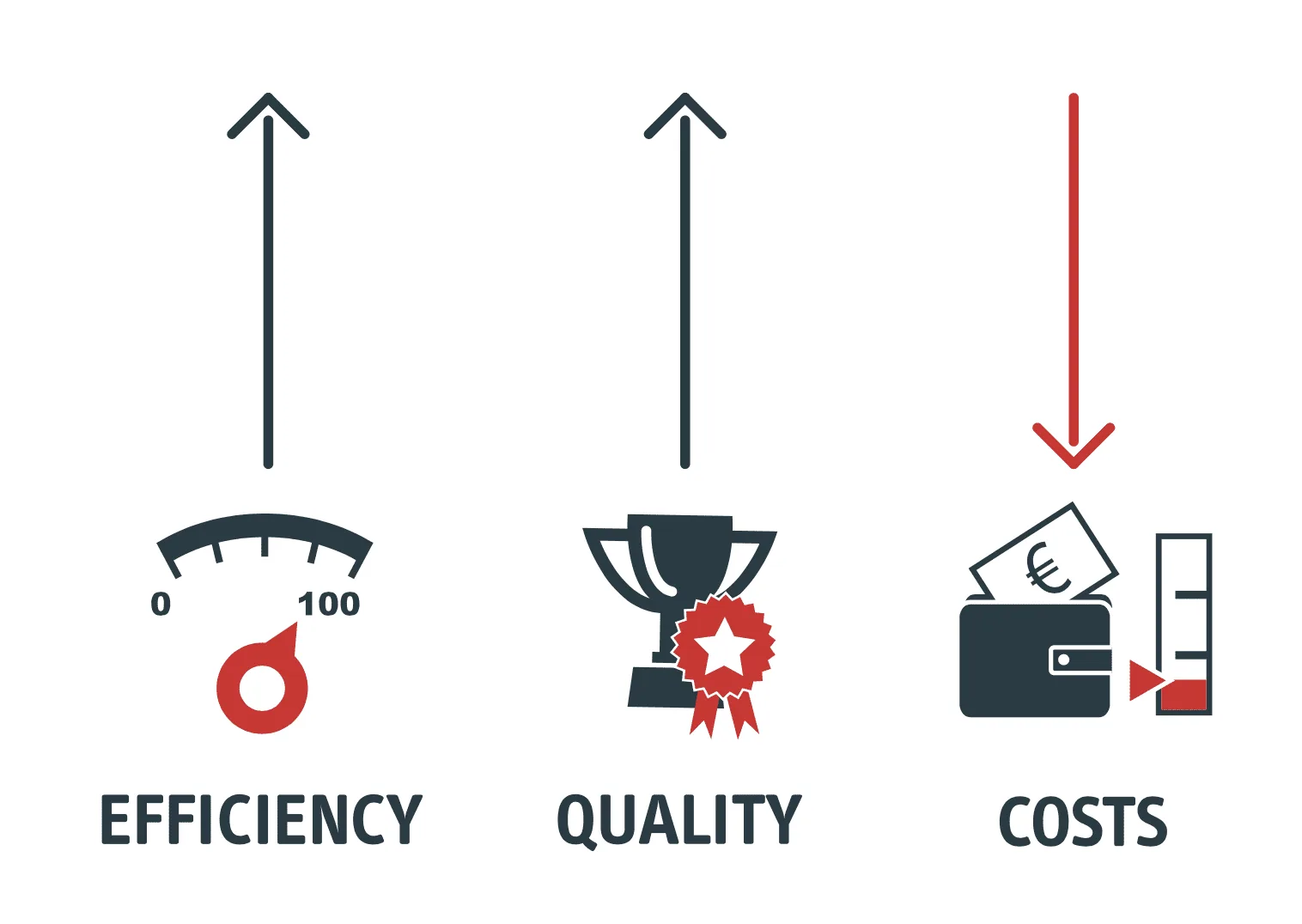
This continuous development inevitably has an impact on company finances.
“I am often consulted by company heads or project owners about application development, reports Romain Demoustier. They generally ask me the same question: “I want to develop a new service. I need an application. Here are the features to create. In your view, how much might that cost? A company quoted me 60,000 euros to develop my application, what do you think?”
Every time, my answer is the same: an application should no longer be seen as a product built in one go, but as a continuous improvement process. Our waterfall development methods have proved to us that producing software as a “one-shot” can cost more than planned. To make our investments more profitable, let us spread them over time. ”
Like the developers who think about their software continuously, executives and project owners must now change how they look at things when creating their web applications. They should no longer think of the design of an application as a fixed cost, but as a monthly spend over the life of the project. That way, they will be able to extend it as they go, according to the needs of their target audience. Everyone has to bear in mind that an application is no longer a fixed product, but a “living” service shaped by the customer experience.
Many will say that the main obstacle to this method is estimating the cost over the long term. It is true that, at the start, it is difficult to cost the project fully. But the project itself is not fully defined at the outset, it will evolve as it is built. Experience has proved to us that producing this way makes it possible to spread the spending better across a development.

Web application development: how we support you at Premaccess
At Premaccess, we have adopted continuous development with several of our clients. When one of them approaches us to develop a piece of software, our aim is to define the initial needs.
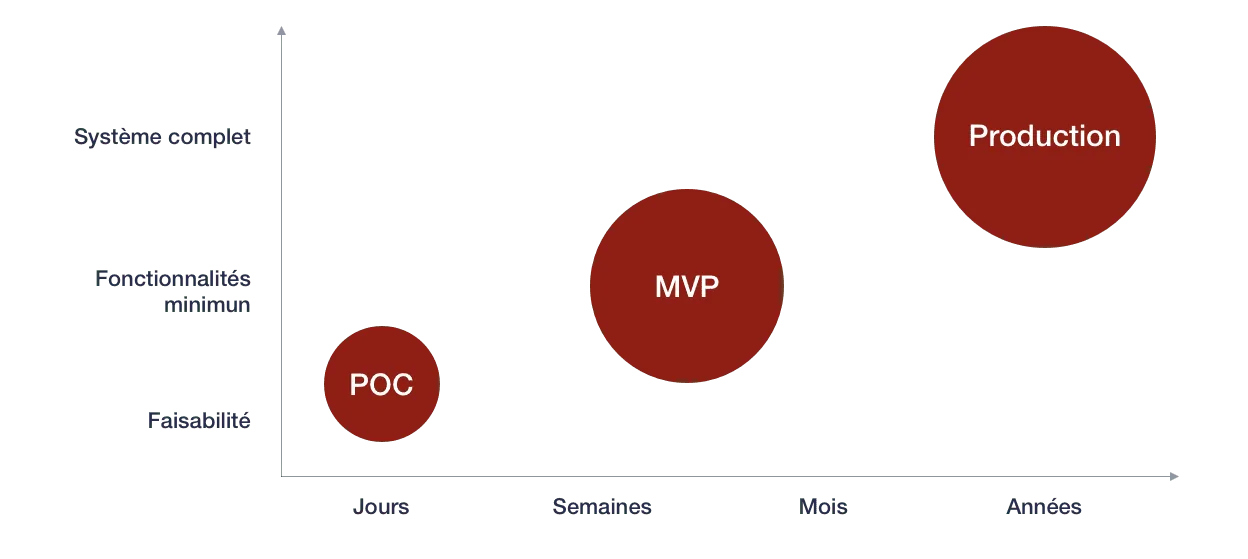
So we develop a PoC (proof of concept). This product is not intended to go into production. It simply serves to check that everything works from a technical point of view, but also from a business one.
Once it is validated, we create a working prototype, an MVP (minimum viable product). We put it online and we make it evolve gradually with the client.
- The main benefit of this method is that developing an MVP costs far less.
- Its second benefit is that we make it available to our clients’ users. That way, we test the idea against the market in order to improve it gradually.
Continuous development when creating an application: the benefits for companies
- You reduce your risk of failure: Generally speaking, executives find it hard to conceptualise what they want. On projects run with the waterfall method, they are very often disappointed, because the final product is not the one they expected. The disappointment is all the greater because money has to be reinvested to change the product again. By developing continuously, by creating an MVP, and therefore by paying as they go, they are able to visualise the result and refine it. You reduce your risk of failure this way because you test your offering with your customers and you make sure you are going down the right technological route.
- You spend less at the launch of the project: Producing an MVP costs you far less than creating a “one-shot” product. Why? Because you create your features as you go instead of creating a product with a multitude of features which, half the time, will not be used by your users. It also has the merit of forcing the executive to distil their offering, to define what its real added value is.
- You will save time because, in this approach, it is quicker to produce an MVP than to develop a large piece of software with a plethora of features in one go.
- You test and adjust your offering with your users. You are therefore more alert to new business models.
- You get a view of your spending: Finally, the Premaccess team advise their clients to deploy their offering on AWS, because this Cloud provider makes it easy to create applications as microservices (serverless). It also gives you a view of your spending: you only pay for the resources you consume. That can prove strategic at the start of a project. There is no longer a complex infrastructure to pay for even when it is not being used.
With the Cloud, we have moved into a platform economy. We have gone from acquiring a product (paid for in one go) to buying services monthly (Spotify, Adobe Suite, Office 365…). That logic now applies to application development. Companies need to bear it in mind. All the more so since data analysis lets you study how satisfied your users are in order to adjust your offering very quickly.
If you would like more information, contact us!