“How do you develop a product in record time and on a limited budget?” Every startup looking for investors asks itself this same question. That is logical, because funders want to judge the relevance and the potential of your offer before committing.
To try to convince them, project owners have to be able to present their product, their value proposition and their technological interest quickly to their potential investors. But also to their users, because their needs change very fast.
Gone are the days when teams worked for months on a project in order to release a single finished version. From now on, continuous development takes precedence. And this, in order to stay as close as possible to users’ needs.
When they are looking to raise funds, startups must not think of their new solution as a whole. That would take them too much time. They have to concentrate first on the essential functions to develop for their targets, the “Killer features” as product owners call them. Product owners are experts in the agile methodology. They are the link between the business side and the technical side of the project.
Once developed, these features are put on the market, tested, expanded and improved in order to arrive at the final product.
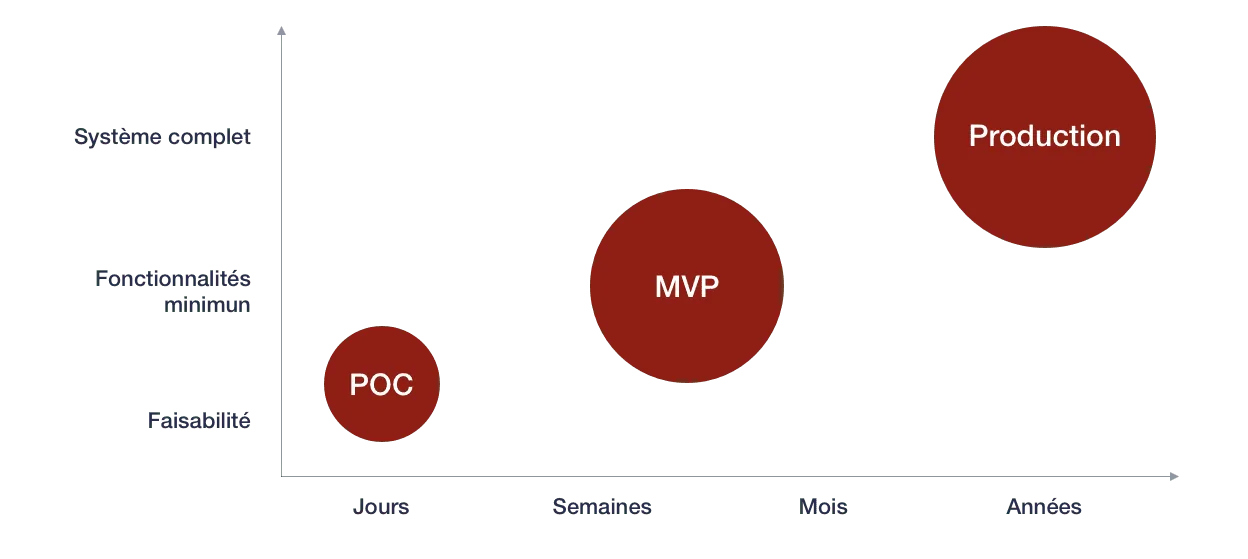
This method is popular today in application development. It has two stages:
- Validating your concept with a PoC, “Proof of Concept”, and creating a prototype,
- Building an MVP, “Minimum Viable Product”.
Let us look together at what these two stages involve, both for start-ups and for large groups too.
Table of contents
- The PoC and the prototype to validate your idea
- The MVP to test your offer quickly
- PoC, Prototype, MVP: the benefits for a start-up
- PoC, Prototype, MVP: personalised support from Premaccess
1. The PoC and the prototype to validate your idea
At this stage, your idea is analysed. First objective: test an idea, measure it against the market, against competitors and consumers in order to see whether it answers a need, an opportunity. Is it feasible from a marketing, technical and economic point of view? Is it an innovative project?
Once the project is judged feasible, its development has to be framed: production of a precise specification, creation of wireframes (functional layout of the product) and of mock-ups (aesthetic representation of the product).
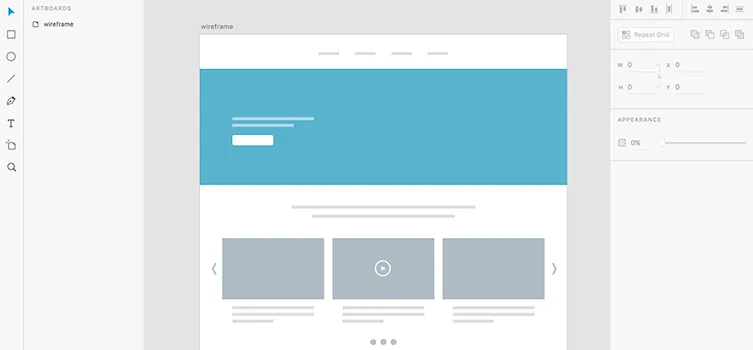
Next comes the creation of a prototype. The prototype answers the question: “What does our solution look like?”. In application development, we distinguish two types of prototyping:
- The horizontal prototype: it presents only the interface of the solution. It is a static mock-up. Only the general layout and the elements of the interface are shown: buttons, menus, input fields, etc.
- The vertical prototype: it implements simplified features so that the user can run through a typical usage scenario.
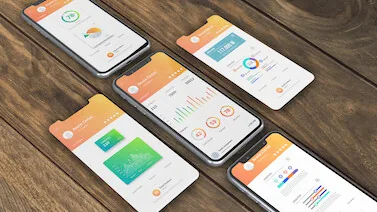
The prototype makes it possible:
- to check that the product that will be developed as an MVP will respect the rules of use in terms of UX (User Experience),
- to estimate the development time.
2. The MVP to test your offer quickly
According to Eric Ries, author of “The Lean Startup ”, “the MVP (‘minimum viable product’) is the first version of a new product that allows a team to collect the maximum amount of validated learning from beta-users, with a minimum of effort”.
The MVP is a functional product. It is a first version of your product, containing the main features, those that answer the needs of your target directly. At this stage, some features considered non-essential are set aside. They will be developed later, if the MVP is validated.

Once the prototype has been produced, this “simplified” product is therefore developed so that it can be put on the market quickly.
Objective: submit your project to a target audience. Then comes the phase of gathering feedback from users to validate it, then to expand it iteratively.
Once the MVP is validated with the minimum set of features, new features can then be added using the natural progression from the PoC, to the Prototype, then to the MVP. We thus work with an agile method.
- The PoC to test that these features will indeed answer a need.
- The MVP to confirm our ideas with our target and our future clients.
The MVP phase can run for an indefinite time because of its iterative nature. Generally speaking, a startup should allow around a year to obtain a stable and definitive version of its product. And so turn an idea dedicated to innovation into something real.
PoC, Prototype, MVP: the benefits for a start-up
You reduce your risk of failure: generally speaking, managers find it hard to conceptualise what they want. In projects run with a waterfall method, they are very often disappointed, because the final product is not the one expected. The disappointment is all the greater because money has to be reinvested to modify the product again. Creating an MVP allows them to visualise the result and to refine it. You therefore reduce your risk of failure, because you test your offer with your clients and you make sure you are taking the right technological path.
You spend less at the launch of the project: producing an MVP costs you far less than creating a “one-shot” product. Why? Because you create your features as you go, instead of creating a product with a multitude of features that, one time in two, will not be used by your users. You develop your innovative technologies step by step. What is more, it has the merit of forcing the manager to summarise his offer, to define what its real added value is.

You will save time, because, in this approach, it is quicker to produce an MVP than to develop a large piece of software with a plethora of features in one go.
You test and adjust your offer with your users. You are therefore more alert to new business models.
The key words: innovate quickly in Tech and accelerate your growth.
You have a view of your spending: finally, the Premaccess team advise their clients to deploy their offer on AWS, because this Cloud provider makes it easy to build applications in microservices (serverless). It also gives you a view of your spending: you pay only for the resources you consume. That can prove strategic at the start of a project. There is no longer any complex infrastructure to pay for even when it is not being used.
PoC, Prototype, MVP: personalised support from Premaccess
Premaccess advises startups on the development of applications or SaaS solutions in serverless. We recommend this “PoC / Prototype / MVP” method to many clients.
But before adopting it with a start-up, we check that:
- this approach is in line with the reality of your company and of your project,
- the product produced as an MVP will be marketable,
- developing an MVP is financially possible for the company.
Once these prerequisites have been validated, we support it step by step from the PoC to the MVP, and from the MVP to the final product. And we make our pattern libraries available to it in order to save even more time during development.
You would like advice on developing an application, an API… Contact us.