
To help small European textile companies produce better, faster and more efficiently, the start-up Fitizzy and its technology partner Premaccess are contributing to the development of an innovative platform funded by the European Union: FBD BModel (Fashion Big Data Business Model).
Launched in 2017, as part of the Horizon 2020 programme, FBD BModel is a data-based portal aimed at the various players in retail, fashion and e-commerce.
At the heart of a European consortium made up of 14 major players, Fitizzy, a specialist in the management and analysis of morphological data, orchestrates the data sets of each of these participants. Data sets built up over the years and through their experience.
Premaccess, for its part, designed the technical architecture of this project: development of a Cloud infrastructure, development of the central FBD BModel portal, creation of an API, data management and protection… The architecture deployed is serverless (AWS lambda), scalable in resources, inventive in features, while being economical on AWS.
Discover the strengths of this project, which aims to support the manufacturing economy across Europe.
It has been a reality for a few years now: the European clothing industry, long faced with drastic shrinkage and massive offshoring to Asia, is tending to move back home. “Made in France”, “Made in Europe”… are coming back into fashion.
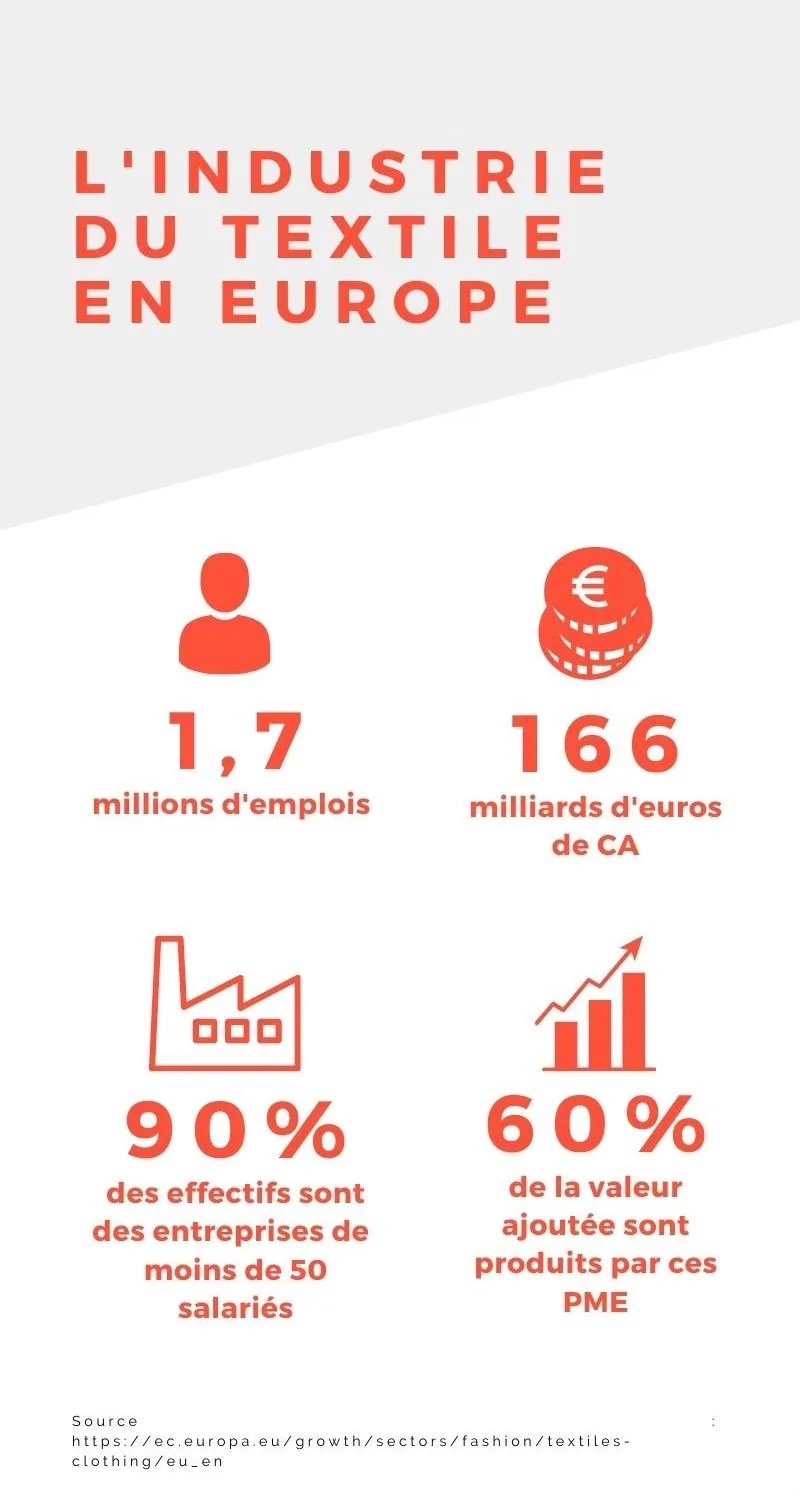
To maintain this competitiveness, these European SMEs have positioned themselves against mass production, favouring high value-added production. But given their size (90% of them have fewer than 50 employees), many struggle to build links with other players in this market and they do not have effective tools to survey consumers properly.
To meet these needs, the European Union decided to support them through the innovative FBD BModel project. Created three years ago, FBD BModel is a portal aimed at the various players in retail (consumers, brands, manufacturers and R&D researchers) and based on data.
Its objective: to enable the development of customised textile production in Europe, to promote the material innovations of European SMEs with connected professional networks, and to raise the level of knowledge of the profession in Europe.
It comprises two interconnected knowledge-based subsystems:
- an interactive design system,
- and a supply chain and production management system.
Once logged in to FBD BModel, the textile professional who wants to produce a new collection goes to the “Builder” interface. An interface in which they enter several pieces of information about the product they intend to make: what type of product (polo shirt, jacket, trousers…), for which target, what touch experience (soft, smooth…), what thermal comfort, what fabrics….
During this design phase, the product is presented in 3D with the requested characteristics.
A range of data-based services is made available to them (product and design recommendation, supplier selection, dynamic task scheduling, production simulation …).
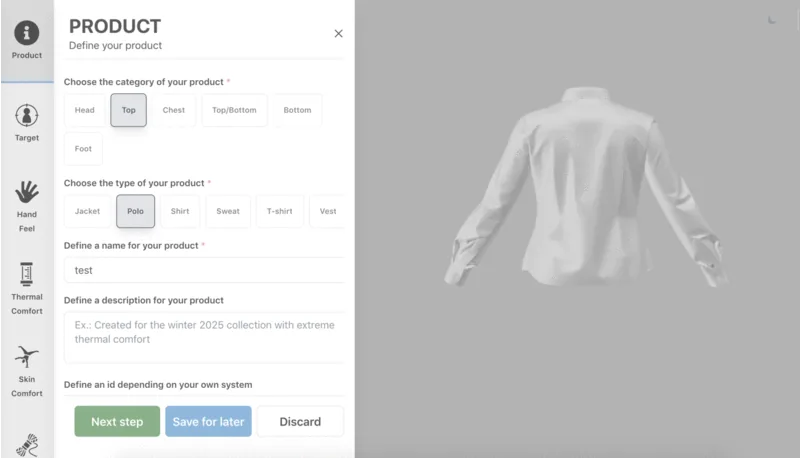
An extended virtual space is provided to display and visually assess the “fashion” and “functional” performance (thermal comfort, touch comfort …) of products that integrate the “consumer lifestyle” parameter into their design process.
This portal has many strengths:
- It brings the players in this market closer together (brands, suppliers, manufacturers, researchers), for + transparency between them.
- It enables the development of small runs of innovative functional garments through a local supply chain based in the European Union, and meeting the customised requirements of consumers.
- It optimises supply chain activities.
- It supports and showcases local know-how (thanks to the data sharing of each player, there is less waste in the production chain).
FBD BModel, a European multi-player project with technological levers
To reach this ambitious objective, Europe has brought together 14 renowned European partners (universities, brands, suppliers, manufacturers). It is funding this project to the tune of 4 million euros.
And to orchestrate it, it selected the start-up Fitizzy and its partner Premaccess following a call for tenders.
Fitizzy, the data expert
At the heart of the FDB BModel consortium, Fitizzy plays a central role. A French software publisher in the ready-to-wear field, this start-up has developed an intelligent algorithm. It recommends to the internet user the size that suits them best according to their measurements and the patterns of different brands. Major consumer brands (Promod, Naf Naf, Celio, Cyrillus, Etam) and professional ones (Bragard, Mulliez-Flory, RATP) use it today.
This solution:
- improves the sales conversion rate of these companies,
- satisfies the customer by offering them a unique user experience,
- can predict trends in the clothing sector using a data-based approach,
- drastically reduces the product return rate.
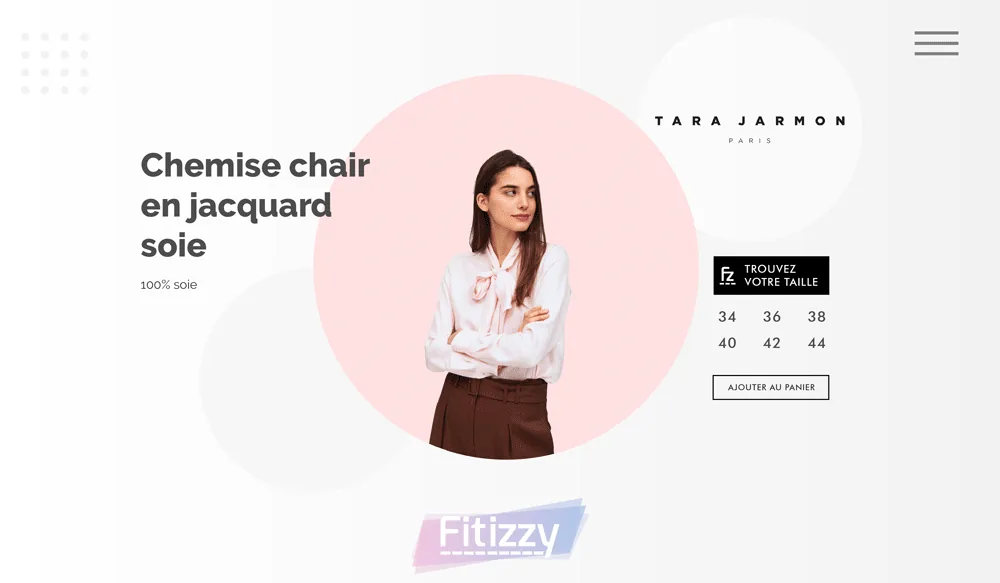
To create the FDB BModel digital platform, Fitizzy therefore drew on this expertise in the management and analysis of morphological and size/garment data. It was in charge of “platform integration”.
Premaccess, the Cloud expert
As the first technology partner of Fitizzy, Premaccess was in charge of the “technical design” part of this platform: architecture, definition of the functional requirements, security and in particular data security. Its primary objective: to build a common data foundation for all the partners.
To be able to create this environment in a secure, resilient, high-performing and lower-cost way, this Swiss company – an expert in Artificial Intelligence, Machine Learning and Cloud development, used serverless technologies.
Managing the data, the users… How Fitizzy and Premaccess developed FBD BModel
Here is an overview of the actions carried out when creating this platform.
The 3 key principles adopted when creating this platform
- An intermediation platform to help users get through the design and production stages, and obtain results quickly
- A safe process for exchanging and storing the data that is needed for the calculations for end users
- A secure environment with a data encryption process and an authorisation process to share them or not, with one or some of the partners.
Development of a single infrastructure for all the partners
At the start of the project, Premaccess put the emphasis on the IT infrastructure in order to manage the various risks:
- risk of non-harmonisation of the data management tools,
- risk of extra cost when designing, implementing and maintaining the services,
- risk of failure of the platform and its performance, if the various databases are not correctly interconnected.
To do this, Premaccess proposed AWS services to develop and manage the platform, in order to collect, gather, consolidate, use and analyse the data of each partner effectively.
Management of the Data Management Plan in order to ensure that:
- the partners use the platform correctly,
- integrate secure data,
- all the building blocks developed by the other partners are integrated and integrable into FDB BModel,
- and above all that the platform is scalable and compatible with the data services of the whole supply chain of the project.
User management and data protection on FBD BModel
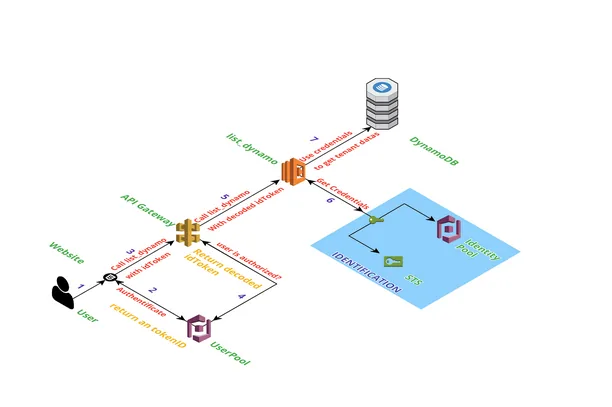
A user belonging to a specific company and having a specific role wants to access certain data. The user reaches the web platform, logs in and navigates to the page containing the data they want to consult. This action generates a call to a secure API to retrieve that data.
The strategy is:
- The API is called and the request is decorated with the user’s authorisation code.
- The user’s authorisation code is checked and a tokenId is returned if the authorisation code is valid.
- The request is now decorated with the user’s tokenId.
- The tokenId is checked to determine whether the user has the right to perform this type of operation on this type of data.
- Once the right has been validated, the database operation can be performed
- The tokenId is exchanged for credentials tied to the scope (tenant) of the data authorised for this user.
- The database operation is performed with those credentials, only the data authorised for this tenant is returned.
Development of an API allowing a smooth data transfer between the Cloud data management system and the various gateways
A user belonging to a specific company and who has a specific role wants to import new data into the platform:
- The user uploads this data to their authorised bucket.
- Once this data has been uploaded, an event is triggered to notify that there is new data.
- Depending on the specific rules of the company, certain steps have to be completed: Encryption, Mutation, Consolidation, Analysis…
- Once the steps have been carried out, this data can be accessible in the platform for the tenant or for other scopes if it has been clearly authorised by the tenant.
- Additional steps can be configured in the pipeline, such as a beta environment if the context requires it.
- The tenant can be notified by email while the process is finished and the data is accessible.
Digital visualisations of the products
- by creating Textile Product Prototypes,
- by digitising the fabrics offered by suppliers
- by digitising garments: which allows brands to visualise the garments they want to produce through this interface.
Scalability and automation
The main objective of the project is to target business opportunities through an innovative service. That is why it was designed to be scalable over time.
Example of a CI / CD strategy on AWS:
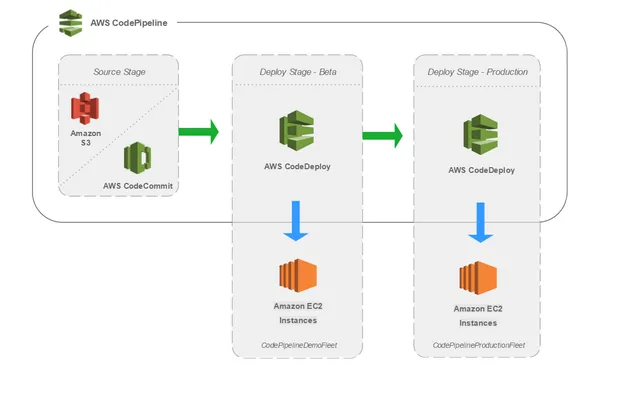
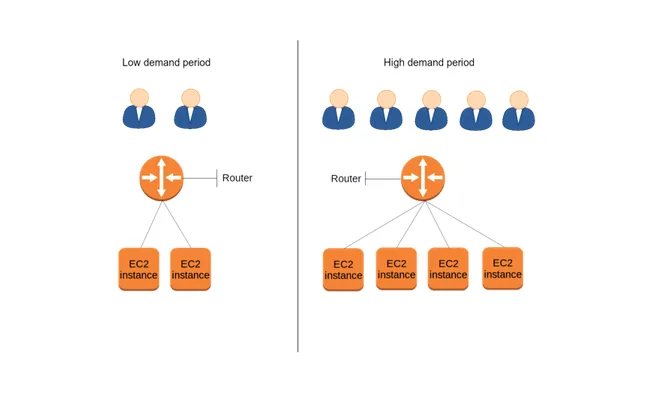
Furthermore, if the platform is used by many users and consequently generates heavy traffic, it is able to adapt its infrastructure (by increasing the instances) to meet the new demand required. The same applies when traffic falls.
Thanks to this process, the cost of the infrastructure is directly affected.
For Fitizzy and Premaccess, FBD BModel was an excellent opportunity:
- to manage a large and complex set of data,
- to use the leading-edge technologies available on the market, to create an ambitious scalable application while maximising costs.
- to work with different types of European players
This European project is due to end in 2021. But the technology developed is only in its early days. One to watch, then…
Who are the partners of the FBD BModel project?
- ENSAIT (École Nationale Supérieure des Arts et Industries Textiles)
- The University of Manchester
- University of Borås
- Center for Management Research of Deutsche Institute für Textilund
- Faserforschung Denkendorf (DITF): management research centre of the German textile and fibre research institutes Denkendorf
- Grado Zero Espace: Italian SME in design and prototyping)
- Bivolino: Belgian garment manufacturer, specialising in made-to-measure shirts.
- Desap System Solutions Limited: company developing mobile applications and technology solutions.
- Fitizzy: omnichannel size recommendation solution.
- Azadora S.r.l.: creator of modern, technological and versatile clothing collections, in close contact with the major Italian and international couture houses.
- Kuvera S.p.a.: fashion accessories manufacturer.
- Beste S.p.a.: textile mill.
- BeWARRANT: corporate finance consultancy.